



If your metabolism feels stubborn, your gut may be asking for support.
For many women over 35, weight loss suddenly feels different. The same meals lead to more bloating. Cravings feel stronger. Energy dips are more frequent. Fat storage shifts, especially around the midsection.
This is biology, and much of that biology starts in the gut.
The Gut–Metabolism Connection
Your digestive system does far more than break down food. It influences:
-
Blood sugar regulation
-
Nutrient absorption
-
Hormone signaling
-
Inflammation balance
-
Energy production
-
Appetite cues
When digestion is inefficient or blood sugar fluctuates rapidly, metabolism becomes less predictable. Cravings increase. Energy drops. Fat storage becomes easier. This is why weight loss starts in the gut.
Why It Changes After 35
After 35, hormonal shifts begin to influence metabolic efficiency.
1. Changes in Insulin Sensitivity
As estrogen fluctuates, insulin response can shift as well. This makes blood sugar regulation more important than ever.
2. Increased Stress Load
Cortisol affects both digestion and fat storage patterns. Chronic stress can slow metabolic signaling and increase central weight gain.
3. Digestive Enzyme Changes
Natural enzyme production can decrease with age, impacting how effectively your body breaks down proteins, fats, and carbohydrates.
If food isn’t properly digested, nutrients aren’t properly absorbed. And when nutrients aren’t absorbed efficiently, hunger cues often increase.
This creates the “stubborn metabolism” cycle.
The Three Gut Foundations of Sustainable Weight Loss
1️. Strengthen Metabolic Signaling with Berberine
Blood sugar regulation is foundational to appetite control and fat metabolism.
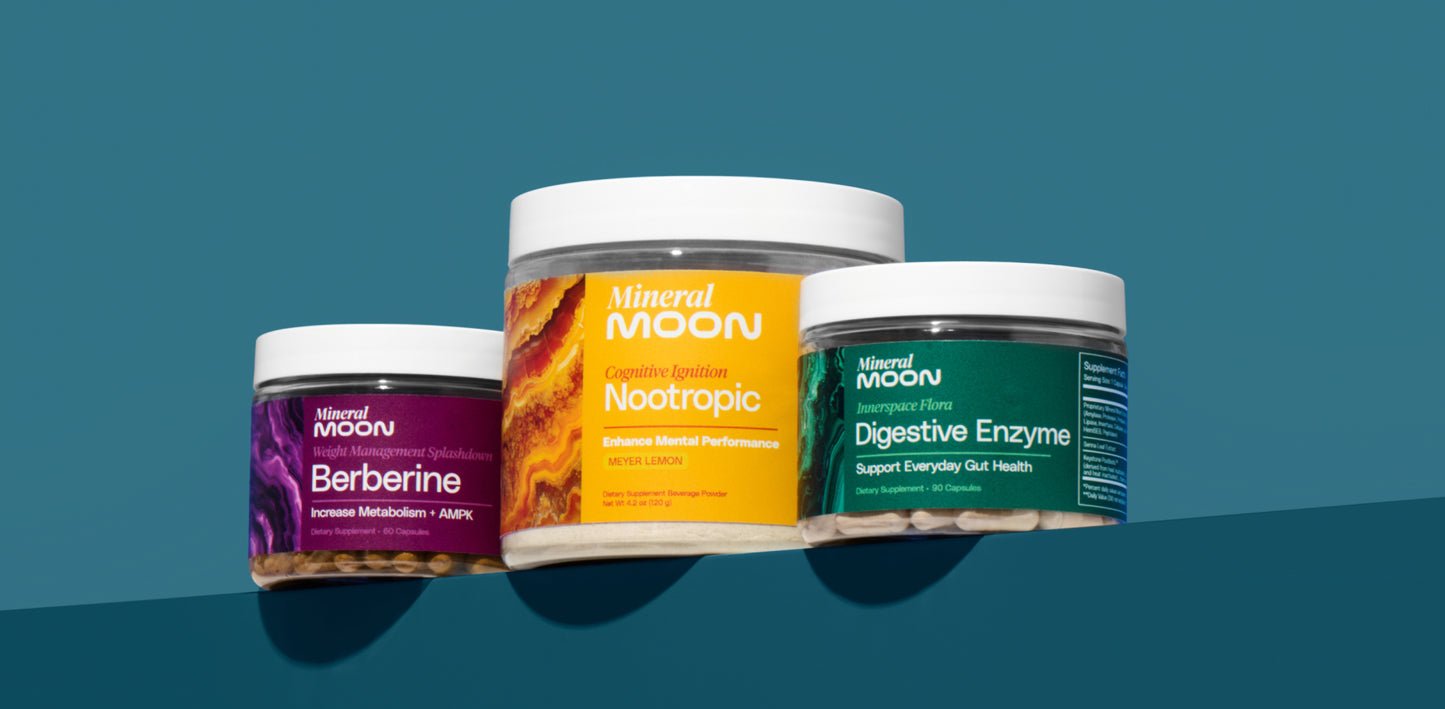
Berberine has been studied for its ability to activate AMPK — often referred to as the body’s metabolic master switch. Supporting AMPK helps improve how the body processes glucose and utilizes energy.
Stable blood sugar can help:
-
Reduce cravings
-
Support appetite consistency
-
Encourage metabolic efficiency
-
Promote steady energy
If you’re looking for how to reduce cravings naturally, start with supporting blood sugar balance.
2️. Improve Digestion with Targeted Enzyme Support
Digestion is often overlooked in weight management conversations.
A comprehensive digestive enzyme formula helps the body:
-
Break down macronutrients more efficiently
-
Improve nutrient absorption
-
Reduce occasional bloating
-
Support regularity
When digestion improves, energy production becomes more consistent. Nutrient signaling improves. And appetite cues often feel more regulated because your body is receiving what it needs. Before cutting calories further, improve how your body processes what you’re already eating.
3️. Support Hormonal Transitions
For women over 35, weight loss isn’t just metabolic — it’s hormonal.
Fluctuations in estrogen and progesterone influence:
-
Insulin sensitivity
-
Water retention
-
Mood-driven cravings
-
Stress resilience
Targeted formulas designed to support cycle balance, menstruation comfort, or menopause transitions can help reinforce metabolic stability during these shifts. When hormones feel supported, appetite signals and energy patterns often become more predictable.
What About Fiber and Probiotics?
Whole-food fiber and fermented foods can support gut health and metabolism, especially when focused on blood sugar control and microbiome diversity.
Fiber from vegetables, legumes, and seeds helps slow glucose absorption. Fermented foods like yogurt or kimchi support microbiome balance.
But these dietary foundations work best when digestion and metabolic signaling are also supported.
Food is the base. Targeted supplementation strengthens the system.
A Gut-First Strategy for Women Over 35
Instead of extreme dieting, try reinforcing the foundations:
✔ Support blood sugar balance with berberine
✔ Improve nutrient breakdown with digestive enzymes
✔ Reinforce hormonal balance during cycle or menopause transitions
✔ Prioritize fiber-rich whole foods
✔ Manage stress to protect insulin sensitivity
This approach doesn’t fight your body. It supports it.
The Real Reason Weight Loss Feels Harder
If weight loss feels more difficult than it used to, your body isn’t failing you.
It’s responding to shifts in digestion, hormones, stress, and blood sugar signaling.
When those systems are supported, metabolism often feels more responsive not because you forced it, but because you strengthened its foundation.
Sustainable weight loss doesn’t start with restriction.
It starts with regulation.
If your metabolism feels stubborn, your gut may be asking for support.


